800 491 9606 • info@lysigroup.co


Inorganic Concrete Modifier
Silicate-based surface impregnating materials are used in surface protection methods, which involve applying a protective layer to the concrete surface, as a means of improving the durability of concrete structures, whether new or existing.
Materials used in surface protection methods are broadly classified into “silane-based,” “silicate-based,” and “other” materials.
Surface protection methods can improve the performance of structures without changing their appearance, but silicate-based surface impregnating materials offer even greater workability (no need to acquire specialized skills, no unpleasant odors, etc.) and cost-effectiveness (can be implemented in a short period of time), while densifying the structure of the concrete surface and cracks.
They are used to ensure durability in new structures and to suppress deterioration and for preventive maintenance in existing structures.
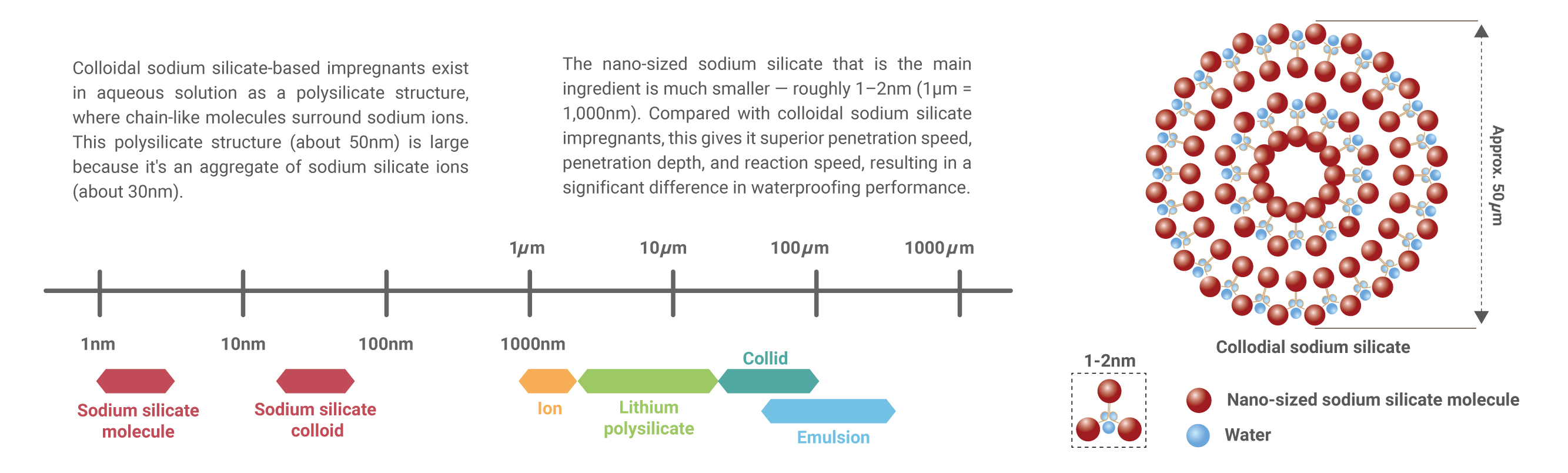
Our “Concrete Modifier (Surface Impregnating Agent)” is a highly functional, low-cost, and innovative silicate-based surface impregnating agent that offers excellent workability and long-term durability. It boasts high waterproofing and water-stopping performance, prevention of salt and frost damage, and suppression of carbonation. Utilizing abundant nano-sized silicates created with the latest nanotechnology, this product effectively operates under the basic principle of “penetration into the RC surface → filling voids → solidification” in a wide range of applications, without altering the color of the concrete surface. (Silane-based and other surface impregnating agents may cause changes in color due to wetness or a glossy surface.) This product is sure to satisfy both clients and contractors and will become an essential component for future RC structures.
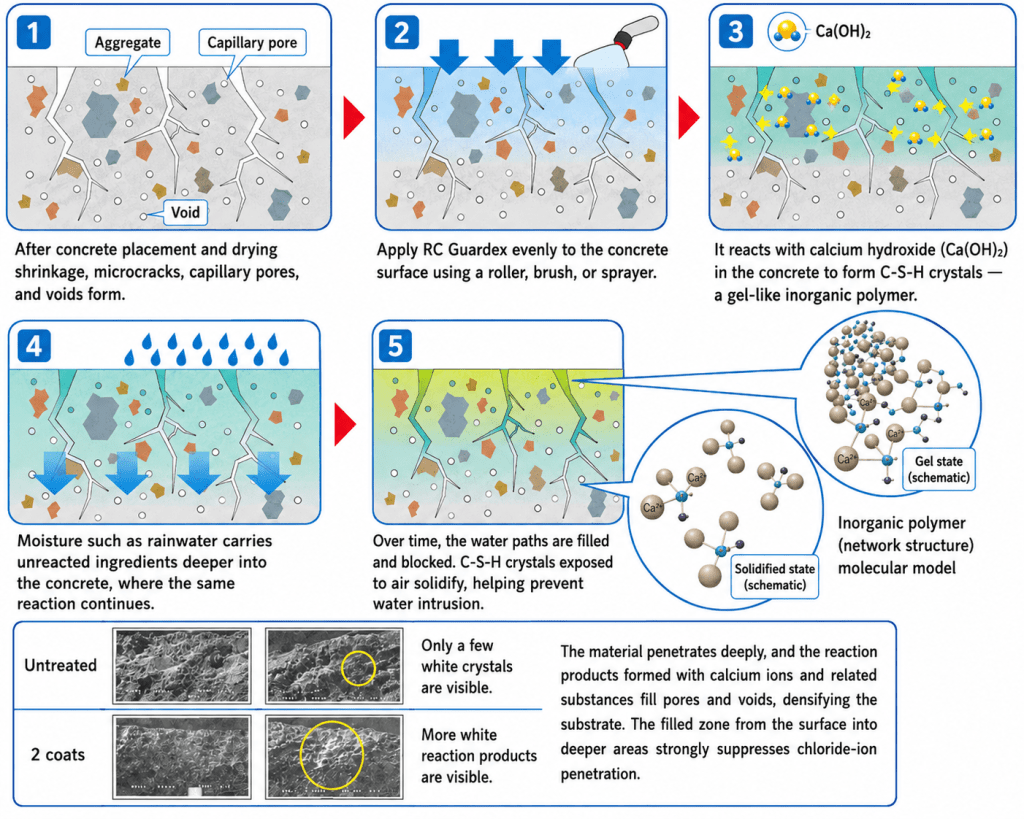
The waterproofing effect of this product consists of a “water channel sealing effect” by filling voids (see Figure 1) and a “self-repair effect” that reacts to cracks and other damage that occur within the structure after application (see Figure 2). The main mechanism is that the silicate main component penetrates deep into the concrete (190 mm in the vertical direction), reacting with various calcium deposits within the concrete, and filling voids and water channels with a gel-like reaction product. This gel-like reaction product then solidifies into a solidified substance in 2 to 12 weeks, transforming the structure itself into a thick waterproof layer and providing long-lasting protection.

